◆
Real-time light data
PAR/ePAR, dim level, status and energy information in one data stream.
Combine real-time plant and process data with energy prices and lighting control. RealTimeBox forms the independent data layer between sensors, LED nodes, dashboards and existing climate computers — enabling smarter control without replacing your current infrastructure.
Reduce electricity costs without compromising the crop’s light requirements.
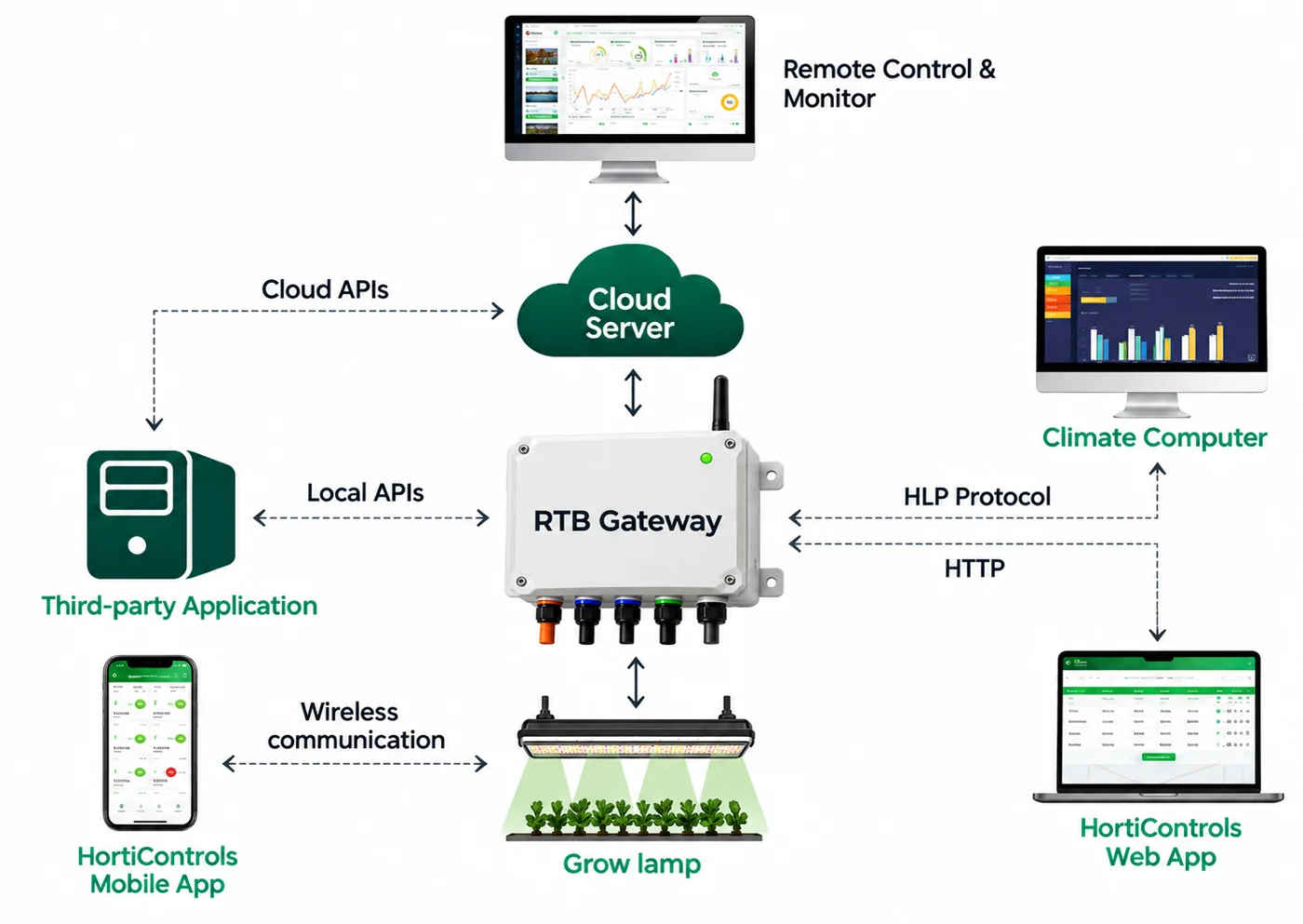
The hardware can be configured to suit each customer. Sensors and devices remain vendor-independent and can easily be replaced or expanded later.
PAR/ePAR, dim level, status and energy information in one data stream.
Work with daily light integral, photoperiod and predefined limits.
Use day-ahead prices and fixed floor/ceiling rules to switch more intelligently and avoid peak costs.
No need to replace Priva, Hoogendoorn or Ridder; RealTimeBox can run alongside them.
The data layer is central. That keeps the solution clear and allows it to operate next to existing systems.
Connect the selected measurement points and check the signals.
Bring measurements together and check availability and quality.
Agree on lighting limits, price rules and the dashboard.
Evaluate results against the agreed crop and energy criteria.
Combine measurements, PAR/ePAR, DLI, lighting groups and energy prices in one overview. Compare scenarios, save energy and stay fully in control of the growing process.
From SensorBox to Smart Energy →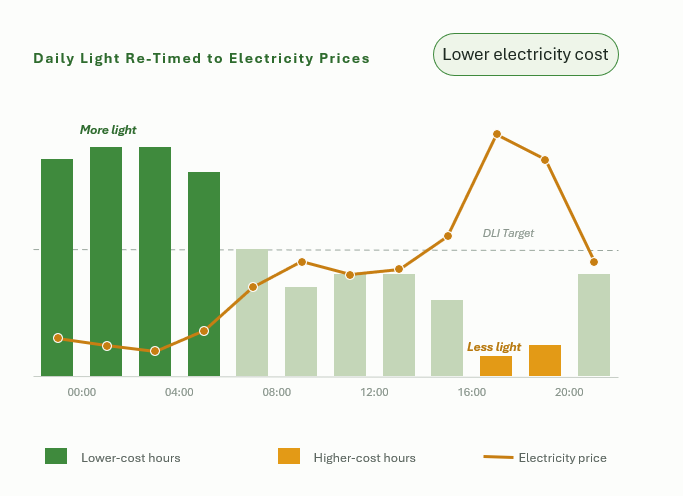
Smart Energy moves lighting towards cheaper electricity hours whenever possible. The grower’s lighting strategy remains in control: the specified DLI, photoperiod and minimum and maximum light levels set the boundaries.
The system reads day-ahead electricity prices and, within the grower’s limits, boosts lighting when energy is cheaper.
The system only eases lighting in expensive hours once that light has actually been delivered earlier. The specified DLI target remains the minimum.
Set a floor and ceiling to protect minimum light intensity and limit any additional lighting.
Energy prices, daylight PAR data and delivered light come together on one platform, with transparent, rule-based scheduling.
lower electricity cost per mole of light in an internal test week with volatile prices
Indicative internal Netvion validation result, not a guaranteed saving. Actual performance depends on electricity prices, available dimming flexibility, daylight, luminaires and the growing recipe. Customer results still require validation.
Hourly prices for the following day are retrieved from European day-ahead electricity markets.
Prices are compared and, where permitted, lighting is increased in cheaper hours and eased during expensive ones.
Only additional light that has already been delivered can be offset later. The DLI target remains the minimum.
Photoperiod, daylight readings and configured dimming limits always apply. Scheduling options include, for example, ±10%, ±25% or ±40% shifts.
Example: lighting is shifted to cheaper hours while maintaining the same DLI. Savings are not fixed for every greenhouse.
The aim is not simply to use less light. It is to deliver the crop’s required grow light at more economical times. This can reduce the cost per mole of light without deliberately under-lighting the crop. Growers may alternatively choose to put the financial benefit towards additional light, within their chosen ceiling.
Explore the potential for your greenhouse →The approach uses predictable rules, supports European day-ahead prices (ENTSO-E), optional grid signals and integrations including Modbus and REST. Actual integration and safety settings are agreed for each installation.
Netvion and Seeed Studio are partners of RealTimeBox.

We first look at the desired data, sensors, connectivity and output. Then we build a compact pilot that can scale later without new infrastructure.